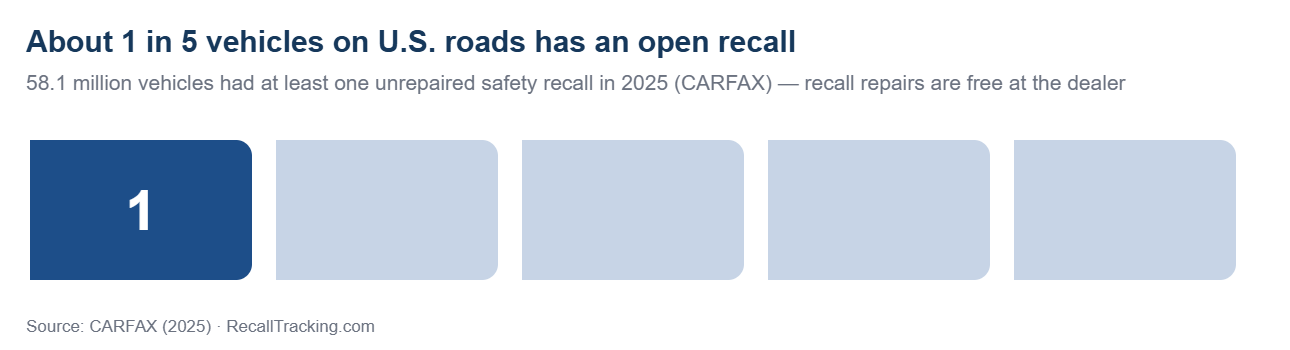
About one in five vehicles on U.S. roads is driving around with an open safety recall — 58.1 million vehicles with at least one unrepaired recall as of 2025, according to CARFAX. Here is how to check your car for recalls — by VIN, free, in about two minutes. The repair, if you need one, costs nothing either.
Step 1: Find your VIN
The vehicle identification number is a 17-character code. Fastest places to find it: the driver’s-side dashboard, visible through the windshield from outside; the driver’s door jamb sticker; your registration or insurance card.
Step 2: Check your car for recalls (two ways)
Search your vehicle in our vehicle recall lookup — type the year, make, and model (for example, 2013 Ford Escape) and you’ll see every recall ever issued for it, in plain English, with what-to-do steps from the official notices. For a VIN-specific answer — whether your exact car has an open, unrepaired recall — use NHTSA’s VIN tool at nhtsa.gov/recalls. The difference matters: a model-level search shows everything issued for that year/make/model; the VIN check tells you whether your specific vehicle is covered and whether the fix was already done.
Step 3: If you have an open recall
Contact a dealer for that brand and schedule the repair. Under federal law, safety-recall remedies are performed free of charge — the manufacturer pays, not you (for vehicles up to 15 years old at the time the defect is determined; in practice, manufacturers typically honor recall repairs beyond that). Bring your VIN when you call. If a dealer refuses a covered recall repair, NHTSA advises contacting the manufacturer and filing a complaint with NHTSA.
Why you should re-check every few months
A clean check today doesn’t stay clean. Our analysis of 109 recalls across 11 popular vehicles found recalls routinely arrive years after problems start being reported — half the recalls with prior warning signs came more than 4.9 years after the first same-system complaint, and we found recalls issued more than a decade after the model year. A 2013 SUV got a rollaway recall in 2022. Set a reminder: check each vehicle you own two or three times a year, and always before a long trip.
Buying a used car? Check it first
An open recall transfers with the vehicle — the seller doesn’t have to fix it and in most states doesn’t have to tell you (federal law requires new-car dealers, not private sellers or most used-car dealers, to clear recalls before sale). Run the VIN before you hand over money. It’s also worth scanning the complaint history for the model — a heavy complaint file on one system can precede a recall by years; our recall watchlist shows what that looks like.
The two-minute habit, summarized
Find the VIN on the dash or door jamb, run it at our lookup or NHTSA’s, schedule the free repair if anything is open, and put a repeat check on your calendar. One in five odds say somebody in your driveway needs it.
Check your car for recalls: quick answers
Is it free to check your car for recalls?
Yes — both our vehicle lookup and NHTSA’s VIN tool are free, no signup. The repair, if a recall is open, is also free at a dealer.
How often should I check?
Two or three times a year, plus before buying any used vehicle and before long trips. Recalls routinely arrive years after a model ships — a clean check today isn’t permanent.
Do recall repairs expire?
Manufacturers must provide free remedies for vehicles up to 15 years old at the time the defect is determined, and in practice typically honor recall repairs beyond that. If a dealer declines a covered repair, NHTSA advises contacting the manufacturer and filing a complaint.
About this page
The 1-in-5 figure is CARFAX’s 2025 estimate (58.1 million vehicles with at least one open recall). Recall policy statements follow NHTSA’s published guidance at NHTSA.gov. Our recall data and how we handle it: data sources & methodology.